
In the 1800s, riverboats were the beating heart of Western Kentucky. They carried goods, news, money, and people. They also carried risk. Gambling on these boats wasn’t just entertainment. It blended business, pride, and survival. Some bets stayed small. Others grew legendary.
A handful of high-stakes wagers went on to influence trade routes, reputations, and local power structures. These stories still echo through Kentucky river towns today.
4 of the Most Popular High-Stakes Riverboat Bets People Would Hardly Forget in Western Kentucky
Some bets mattered because of the money involved. Others mattered because of what changed afterward. Below are four of the most talked about riverboat wagers that left a real mark on Western Kentucky life.
1. The 1835 “River Queen” Cotton Cargo Wager
In the 1830s, cotton trading along the Ohio River was known for its fierce competition. One well-documented incident involved rival traders aboard the steamboat River Queen, where a wager was placed on whether a cotton shipment would reach market before prices dipped.
The stake wasn’t just cash. It was credibility. When the cargo arrived ahead of schedule, the winning trader secured better contracts and redirected shipments through Western Kentucky ports for months afterward. Local records show increased dock activity tied to that route shortly after.
This kind of gambling blurred the line between speculation and commerce. A single bet could influence where boats docked, who hired local labor, and which towns thrived.
2. George Devol’s Legendary Riverboat Poker Run
George Devol was one of the most famous professional gamblers of the 19th century. He traveled extensively along the Ohio and Mississippi Rivers and later wrote about his experiences in Forty Years a Gambler.
Devol described poker games where the stakes were extreme for the time. While later retellings sometimes exaggerate the details, verified accounts confirm games involving life-changing sums of money and long-running debts settled across multiple river stops, including Western Kentucky towns.
These stories show how high-risk gambling once worked. Players didn’t have safety nets. When you compare that to modern low-risk incentives like 100 free spins, for example https://casino-freispiele-ohne-einzahlung.com/100-freispiele-ohne-einzahlung/, where participation doesn’t require risking personal ruin, the difference is alarming. The contrast shows how much gambling culture has changed, even though the human appetite for chance hasn’t.
3. The Paducah Ferry Rights Dice Bet
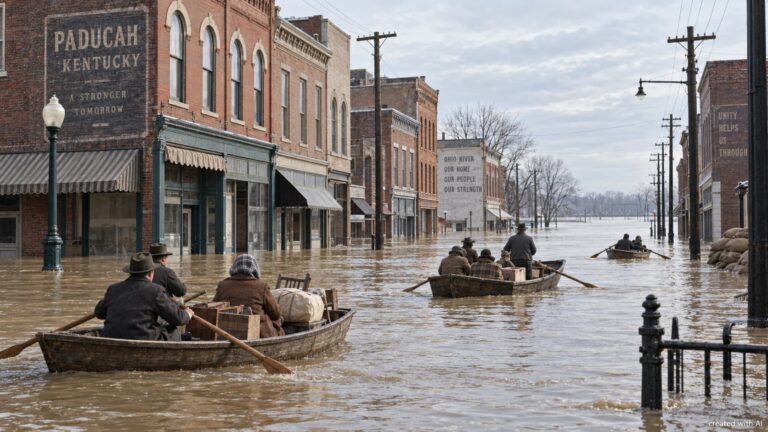
Local newspapers and municipal records from the mid-1800s reference disputes over ferry operation rights near Paducah, a major river crossing point. One widely repeated account describes a wager made aboard a riverboat between two competing ferry backers, using dice to settle who would control the franchise.
While the exact roll isn’t preserved, the outcome is clear. Control of the ferry shifted, affecting toll prices and access for farmers and traders crossing the river. That change lasted years.
Riverboat gambling often involved more than money. Common wagers included:
- Cash or gold
- Cargo shares
- Livestock
- Temporary or informal operating rights
These bets could reshape daily life for entire communities, not just the players at the table.
4. The Last High-Stakes Game on the Belle of the West

The Belle of the West, launched in the 1820s, became a symbol of the golden age of river travel. By the time railroads expanded, riverboat gambling was fading. Local histories describe a final, high-stakes card game held aboard the vessel during its later years. The sum of money involved isn’t the focus here, but how symbolic the game is. It marked the end of an era where entertainment and commerce were clearly dominated by riverboats.
As gambling moved from boats to land-based venues, then we began to see incentives here and there. In Germany for instance, modern systems focus on structured rewards such as free spins, casino free spins, and free spins no deposit Germany. All these rewards are designed to do one thing: attract more people to the games, so more individuals can participate without having to worry about the personal consequences common in the riverboat age.
Even today, concepts like no deposit free spins and daily free spins no deposit Germany show how gambling incentives have morphed to encourage accessibility rather than raw risk.
Final Thoughts
Riverboat bets in Western Kentucky were never just about winning money. They shaped trade, infrastructure, and reputation in towns that depended on the river for survival.
Modern gambling looks different. It is clearly built around controlled incentives like free spins no deposit instead of raw risks as experienced in the riverboat age. But these riverboat stories remind us of something: that risk, chance, and human ambition have always flowed alongside the water.

 John Gama